Urabon by Victor Kinjo, Yama Yuki, and Patrick Shiroishi
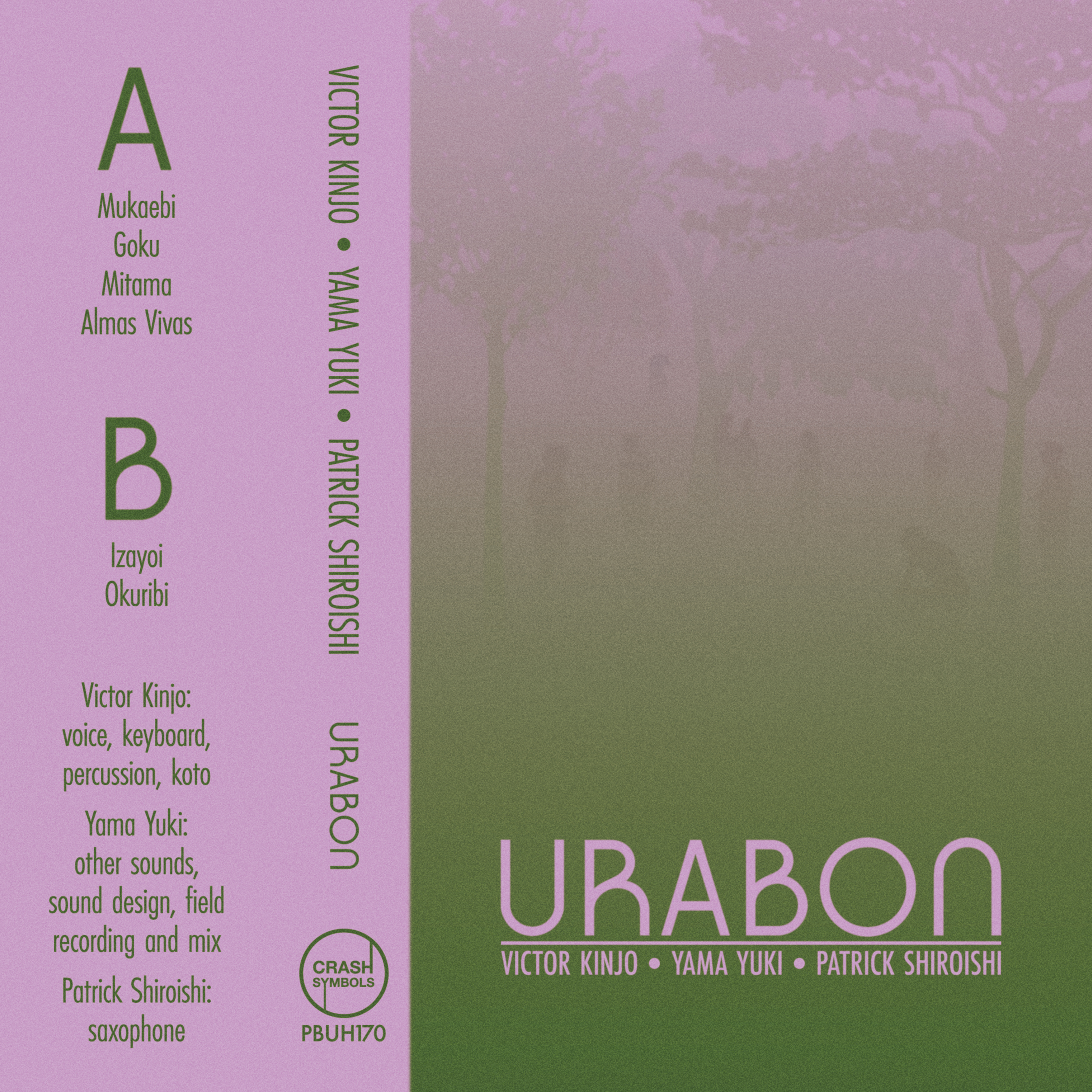
Victor Kinjo is a Japanese-Brazilian singer and researcher with roots in Ryukyu Islands/Okinawa. He and Yama Yuki, born in Japan, met while the latter lived in Brazil. When Yama traveled to Kinjo’s studio in the deep Brazilian Atlantic forest, he expected to play Japanese and Okinawan traditional folk music. Yet when the session started, instead of following any particular musical thread, their sounds naturally flowed into something unclassifiable. Kinjo and his partner, Eduardo Colombo, sang as if they were communicating with the lost souls of Japanese immigrants from the past. Afterwards, Kinjo and Yama invited celebrated Japanese-American saxophonist Patrick Shiroishi to add his unique talents to the project.
It is a little-known fact that Brazil has the biggest Japanese and Okinawan immigrant community outside of Japan. Encouraged by labor agreements to relocate with their families, destinations varied widely. Large numbers chose the United States, Canada, the Philippines, Peru, China, and especially Brazil. Those who responded included a large Okinawan contingent fleeing poverty and colonialism after the formal annexation of the southern Ryukyu Islands. As it was for communities in the US, Japanese immigrants in Brazil endured unimaginable struggles to establish themselves. This was especially true during World War II, when they were systematically discriminated against for being Japanese or of Japanese descent.
Urabon refers to a Japanese Buddhist festival which takes place in summertime, when ancestral souls are said to return to this world and visit their relatives. The festival dates back to the 7th century, believed to have been adopted from Indian and Chinese culture. The ritual was modified to suit the Japanese tradition of animism, with various ways to celebrate. Today, the festival is simply called “Bon” or “Obon,” but the original word is “Urabon” — possibly derived from the ancient Persian “Urvan” for “souls.” We decided on “Urabon” instead of the conventional “Obon,” since it alludes to other geographical connections and feels more suited to the idea of ancient souls. This also subtly alludes to the production of the album, joining artists from different parts of the world together for the first time.
Yama Yuki - objects, electronics, field recording and mix
Victor Kinjo - voice, keyboard, percussion, koto
Patrick Shiroishi - saxophone
Mastering by Nicolas Sheikholeslami
Additional sounds:
Dario Sakumoto - percussion on "Mitama"
Eduardo Colombo - voice and esoteric dance on "Izayoi"
Special thanks to Dwight & Liz, Yusuke Sugimoto, Chiara Comastri and the ancestral souls wandering around Mogi das Cruzes and Los Angeles.
Credits
License
CC BY-NC 3.0. See the Creative Commons website for details.Tags




Est. 2010
"Your decency remains unimpaired, your virility unharmed, your person is free from any degrading submission, but in your hand is a tambourine." -Seneca