saeculorum by sean colum
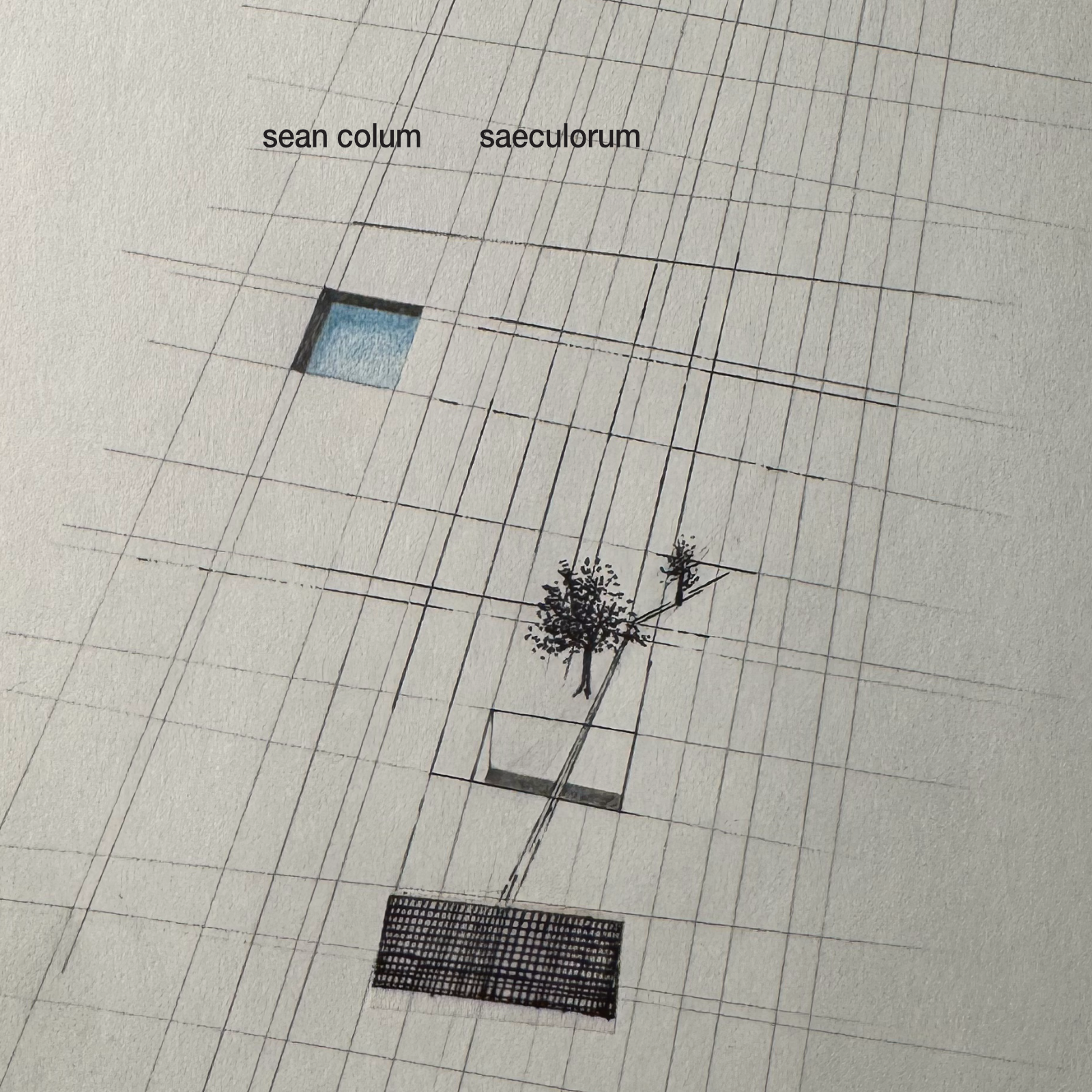
saeculorum presents recorded materials collected over a period of several years, comprising instrumental performance, electro-acoustic sound production, fixed media and environmental miscellany in a compositional form which exhibits high mesostructural discontinuity. Diverse timbre and texture events are arranged in a discrete, piecewise fashion, eschewing linear development and 'narrative' in favour of formal stasis. This sense of stasis is established by a consistent, high frequency of change throughout the composition; a continuous, structurally orthogonal flux which, rather than the shock of disjuncture, proposes a 'softer, ambient avant-garde' (see Lin, Tan. Heath Course Pak. Denver: Counterpath, 2012. p. 133). Each individual segment was recorded in the same room and is thus conditioned by a fixed set of acoustical parameters, producing an acoustical sameness or similarity which serves to counteract local timbral and textural heterogeneity. Additionally, the presentation of instrumental, electronic, and non-musical, environmental textures as discrete, contiguous events might suggest a skepticism towards the common approach in much contemporary sound art and experimental music of articulating form via an additive process of multi-timbral, multi-textural superimposition.
Sean Colum is an English musician residing in Tokyo, Japan, with an interest in formal disjunction, rhythmic discontinuity, repetitious texture and timbral novelty. In addition to a prolific catalog of self-released works, recordings of his music have been published by Ftarri/Meena (JP), Madacy Jazz (US) and Speculation Editions (UK).
========
An interview by Zhu Wenbo between Sean Colum
Q: Would you like briefly introduce yourself? What’s your music background?
A: Like many others I started off playing in punk and indie bands, then got into electronic music production via minimal techno and house music, eventually becoming interested in experimental music. I am an autodidact and have had no formal musical training or education. Improvisation has always been central to my approach as first principle, though I don't necessarily consider myself an improvising musician in the cultural sense.
Q: Now you’re based in Tokyo. What have brought you here, and how long have you been in Japan? How has the city—and its music scene—shaped your own work?
A: I've been living in Japan for several years. I came with my partner who I met in the UK (she currently lives in Paris). The sonic profile of the area around my home in Tokyo has featured a lot in my recordings as a kind of non-musically bounded ambient backdrop, so that's maybe one way in which the city has shaped my work, if at all. The Tokyo experimental music scene in its current configuration has had no impact on my music whatsoever. My music has been developed independently of any musical community. Despite being here for some time, as far as I can tell hardly anyone in Tokyo is even aware of my music, let alone interested in it.
Q: How would you describe your music? I once saw you play guitar, and in the midway through the set, you played some recordings on your phone….
A: I would describe my music as being primarily concerned with the distortion or subversion of musical form, structure, timbre, pitch, and time-domain parameters in novel and surprising ways. These days I'm mostly doing this via the use of computer generated sound synthesis and off-the-shelf, non-specialised software tools (though I still occasionally make use of guitar and other instruments). I have no interest in systematised compositional processes and prefer to employ a purely experiential approach based mostly on intuition and real-time interaction with such tools. I also avoid the use of extramusical conceptualism in my work. As I remember, that particular performance was not very well received, haha. Live performance continues to interest me inasmuch as it affords the optimal conditions in which to do something unexpected. It's a punk cliche maybe but I'd rather the audience in such situations respond with disgust or annoyance or bewilderment than like, hollow appreciation or whatever. To what extent is the risk of alienating the audience a necessary byproduct of creating a potentially novel experience? I don’t know. Basically experimental music has become too established and too normal and more musicians should be actively striving to make it weird and radical and irreverent.
Q: Your music is hard to find online.However on the other day, I find a long list of self-released digital albums on Discogs that seems you’ve already removed from Bandcamp. What kind of music were they, and why did you remove them? Are you dissatisfy to them?
A: Those recordings all comprise various experimental music compositions and are aesthetically consistent with my current output, I just felt that they had served their purpose and since there is already enough landfill experimental music on the internet they became prime candidates for deletion.
Q: Your newest album “saeculorum” is built from various recordings gathered over years. Are these sound materials overlap with the removed albums, or are they completely separate? (If there’s no overlap, could you talk about what the material on album actually is?)
A: Yes, there is some overlap. The earliest materials date from 2014, while some were recorded especially for this piece. Some of it originally functioned as standalone compositions, lots of it is discarded recordings, the ends of recordings, forgotten recordings, unnoticed recordings, hidden recordings, phantom recordings, zombie recordings, recordings that don't exist, etc.
Q: If I were to summarize the commonalities of the sound materials in this album, I would say they are all sounds that could be ignored or easily overlooked. However, their current arrangement brings a completely new tension. I don't know if you agree. I'd like to know how you actually selected, organized, and mixed the sound materials? How did you approach the large number and variety of sound materials? Was there any chance or randomness in your approach?
A: Yes, I agree, that was in fact one of the initial prompts for this album: the desire to formally repurpose and recontextualize certain 'archival' materials. The compositional process was basically haphazard and intuitive with a hybrid top-down/bottom-up approach to the piece's formal construction; high mesostructural discontinuity being the primary compositional determinant. While I somewhat agree that the sounds to varying extents 'could be ignored or easily overlooked', it should be noted that I’m not intending to highlight the quotidian nature of certain materials in an attempt to mark them as neutral; I generally find the obsession in contemporary experimental music with 'everyday objects' to be extremely hackneyed and boring. Also, any outside intrusions such as cars, bicycle brakes, construction work, etc are being picked up inside the room from an open window. Other outside environmental sounds were played back into the room via YouTube. There were no field recordings used; I have never used field recordings in my music. Each individual audio segment essentially represents the total sonic profile of my room at the time of recording.
Q: I'm curious how you first came up with the idea to make this album? When was that? Does the final version of the album match your initial vision?
A: I came up with the idea to make this album in spring 2025. I've been working with mesostructural discontinuity and linear audio montage in some form or other since around 2011/12 and wanted to make a long piece to showcase my interest in these techniques while collating some of my other musical preoccupations of the past ten years or so. I'm currently working on a new piece of a similar length and with similar materials but with a much higher density of disjunction events which I hope will be ultimately more radical in its absolute rejection of long-form motivic development.
Q: Do you think if there are any differences about curent experimental music scene between Japan (or Tokyo) and other places (such as the UK)? I believe that experimental music fans all over the world are very familiar with some classic Japanese names making super noise or super quiet music, but they may not know much about what is happening there.
A: I don't know anything about the current experimental music scenes in the UK or elsewhere so can't meaningfully comment on any differences. Sorry!
Q: Finally, would you like recommend some artists around you who still deserve wider attention?
A: They're not as active now I don't think but Takefumi Naoshima, Takahiro Hirama and the Encadre label are vastly underappreciated and deserve wider attention. Their output in the late-00s was to my mind the last time experimental music felt genuinely new, innovative, futuristic, disruptive, inscrutable (I know of at least one other composer who feels the same way) ... I particularly recommend checking out Takahiro Hirama's Thr Eat Rhy Thm, the two collaborative albums of Kanichiro Oda and Takefumi Naoshima, as well as the two Septet recordings from 2007, one of which is on Ftarri sub-label Meenna. Also, the best experimental music release of the 2020s so far comes from China and it is called Field n.n. by Xiang. It has a similar air of mystery, inscrutability and confusion that I find very intoxicating.
Tracklist
| 1. | 41:51 | 41:51 |
Credits
Recorded in the same room in Yanaka, Tokyo.
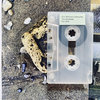
Cover art by Dahong Hongxuan Wang
License
CC BY-NC-SA 3.0. See the Creative Commons website for details.



Zoomin' Night
燥眠夜 is an experimental music label running by Zhu Wenbo. Started from 2009 and based in Beijing.